A 60-day plan, run from your browser
Help your dog stay home alone calmly for 4 hours.
A 60-day, step-by-step plan with a daily absence timer that tells you when to go longer, repeat, or step back.
Re-Opening soon · $147 one-time · 30-day money-back guarantee
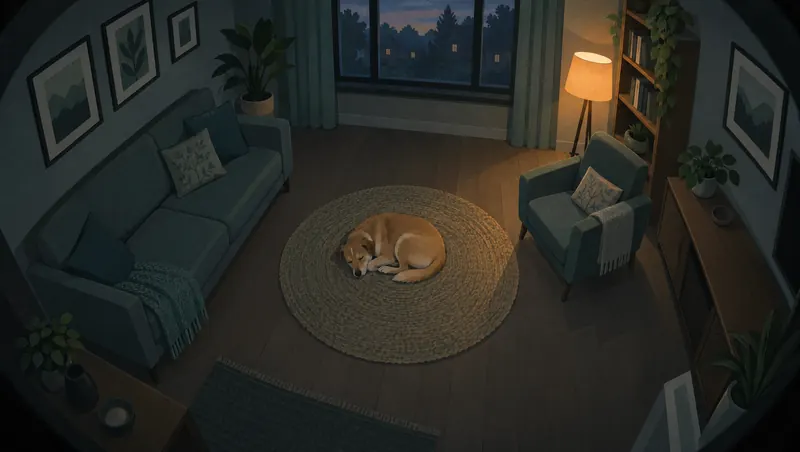
Event log · a typical weekday
The door closes. The howling starts.
None of it is spite. It’s a dog that hasn’t learned yet that you always come back.

The guilt on the drive to work
You can still hear it in your head at the first red light.
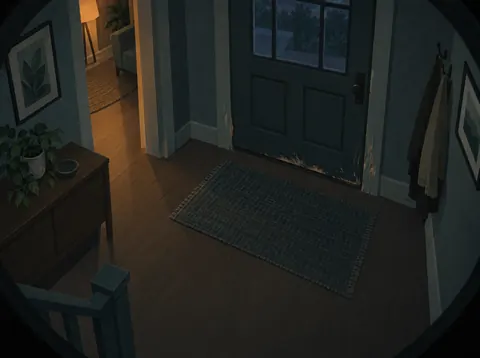
The chewed door frame
Fresh marks right where you left.
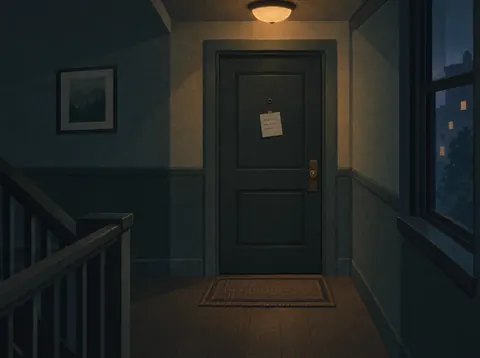
The neighbor note
Taped to the door. Polite, for now.
60 seconds · 5 taps
Where would your dog’s plan start?
Answer five quick questions. You’ll see a starting time, an example of how the plan builds, and the first thing to work on.
No sign-up needed to see your result.
Alone-Time Check
1 / 5How long can your dog be alone right now before barking, howling, or chewing starts?
How it works
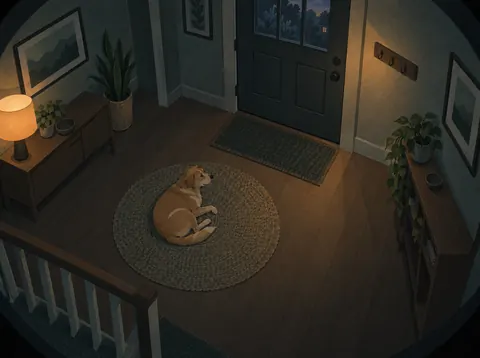
Short absences under your dog’s limit
Start below the point where worry kicks in. We call it staying in the calm zone.

Watch on any home camera, then log what you saw
Calm, mild signs, or stressed. It takes about 15 seconds.
The app picks tomorrow’s step: longer, repeat, or shorter
One plain sentence explains why.
You’re never guessing what to do today.
Shown with example values. Works in any browser, nothing to download.
Session 2 of 3 · target 4:30
3:12
left · watch your camera app
How did it go?
- Calm Resting, sleeping, soft body
- Mild signs Door-watching, lip licks, short whines
- Stressed Sustained barking, pacing, scratching
Progress
- Current target
- 4:30
- Longest calm
- 4:30
- Calm this week
- 11
- Days practiced
- 12
Red: stressed · Grey: rest day
Why short absences work
Stay in the calm zone. Grow it slowly.
Every dog has a threshold: the point where being alone tips from fine to frightening. Absences kept under that line build calm reps, and calm reps move the line. Going over it too often teaches the opposite.
That’s why every session starts short, and why the app steps back as readily as it steps forward. The ASPCA describes this graduated-departure approach in its guide to dogs left alone.
Learn to read what the camera shows you:
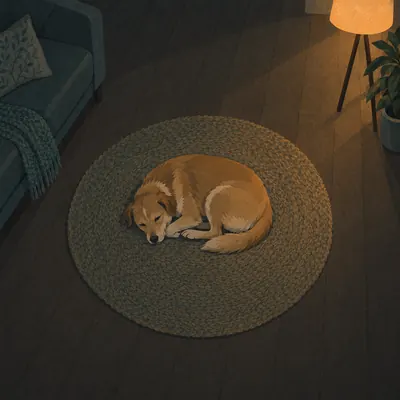
Calm
Lying down, soft eyes, sleeping, chewing a toy slowly.
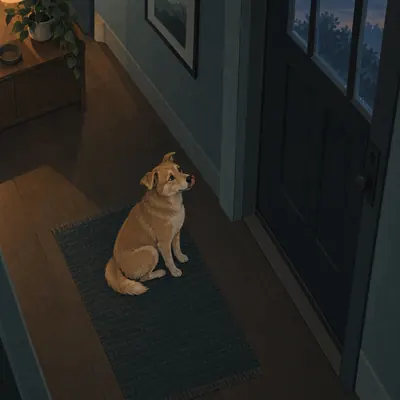
Mild signs
Lip licking, looking at the door, short whines, brief pacing.
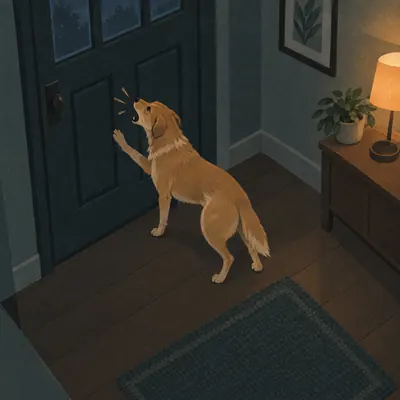
Stressed
Sustained barking or howling, repeated pacing, scratching exits.
Illustrations. The in-app library adds short real clips for each sign.
What’s inside
Seven short modules, about 2 hours 20 minutes in all. Modules 0–2 open on day one so you can run a first session within 30 minutes. The rest unlock as your plan moves.
Four tools
- Absence timer — the daily loop
- Departure-cue checklist — keys, shoes, coat
- 60-day progress chart — calm minutes by day
- Body-language library — calm, mild, stressed
| Module | Topic | Lessons | Unlocks |
|---|---|---|---|
| 0 | Start hereHow the plan works, the vet check, when to get help now | 3 lessons · 13 min | Day 0 |
| 1 | Reading your dogThe calm zone, body language, camera setup, a baseline | 4 lessons · 25 min | Day 0 |
| 2 | Setting up for successCoverage for long days, a safe room instead of a crate, food toys | 4 lessons · 23 min | Day 0 |
| 3 | Graded absencesYour first session, the rules, coming home | 4 lessons · 22 min | Day 1 |
| 4 | Departure cuesWhy keys and shoes set things off, and the cue drill | 3 lessons · 18 min | Day 3 |
| 5 | Plateaus and setbacksStuck times, bad days, the 40-minute wall, questions for your vet | 4 lessons · 22 min | Day 14 |
| 6 | Toward 4 hoursPast one hour, real work days, keeping it after day 60 | 3 lessons · 17 min | Day 30 |
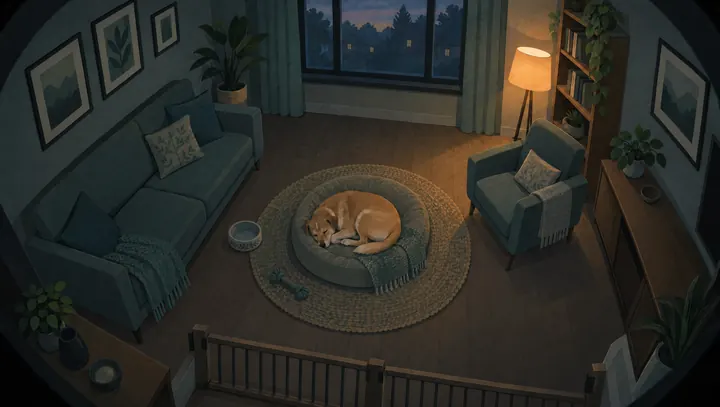
Safety first
We start with a vet check.
We never use crates for dogs that panic, never use punishment, and point you to a veterinary behaviorist if your dog is at risk of hurting itself.
- A safe room or gated area instead of a crate
- The plan pauses if you log an injury or escape attempt
- Medication questions go to your vet, never to us
Who it’s for
- Adult dogs, 1 year and up, that bark, howl, or chew when left alone
- Owners who can give 10–20 minutes a day
Not for
- Puppies under 1 year
- Dogs that injure themselves when alone — please see a vet
- Anyone wanting a one-week fix
Re-Opening soon. Be first in line.
- Join the waitlist now; we’ll email you the day it opens
- The 60-day plan, personal to your dog
- 7 modules of short lessons
- 4 tools that work in any browser, even offline
- Lifetime access to version 1
Calm Alone
$147 one-time when we re-open
Optional Coverage Kit ($27): the sitter sheet, daycare checklist, and neighbor note templates that keep your dog under threshold while you train.
30-day money-back guarantee. Email us and we refund you.
Calm Alone is an educational training program. It is not veterinary advice and does not diagnose or treat any medical or behavioral condition. See your veterinarian before starting, and for any concern about your dog’s health or safety.
Questions
All questionsDo I need a special camera?
No. Any phone or pet camera with live view works. You watch it while you’re out, then log what you saw in the app.
How much time per day?
About 10–20 minutes, depending on how many short sessions you choose. There’s one rest day every week.
What if I can’t avoid long absences?
The plan includes a coverage module: daycare, sitters, friends, and bringing your dog along. Long absences past your dog’s limit can set training back, so the plan helps you cover them while you train.
Will this work for my breed?
The plan adapts to your dog, whatever the breed, by following what you see on camera. We can’t promise a result for any dog, but every step is sized to how your dog is doing.
Is this a replacement for my vet?
No. The plan starts with a vet check, and your vet is the one to see for any concern about your dog’s health or safety.
When can I start?
Calm Alone re-opens soon. Join the waitlist with your email and we’ll let you know the day it does.
Re-Opening soon
Be ready for day 1.
Join the waitlist and we’ll tell you when Calm Alone re-opens. Your first session could be shorter than a minute. That’s the point.